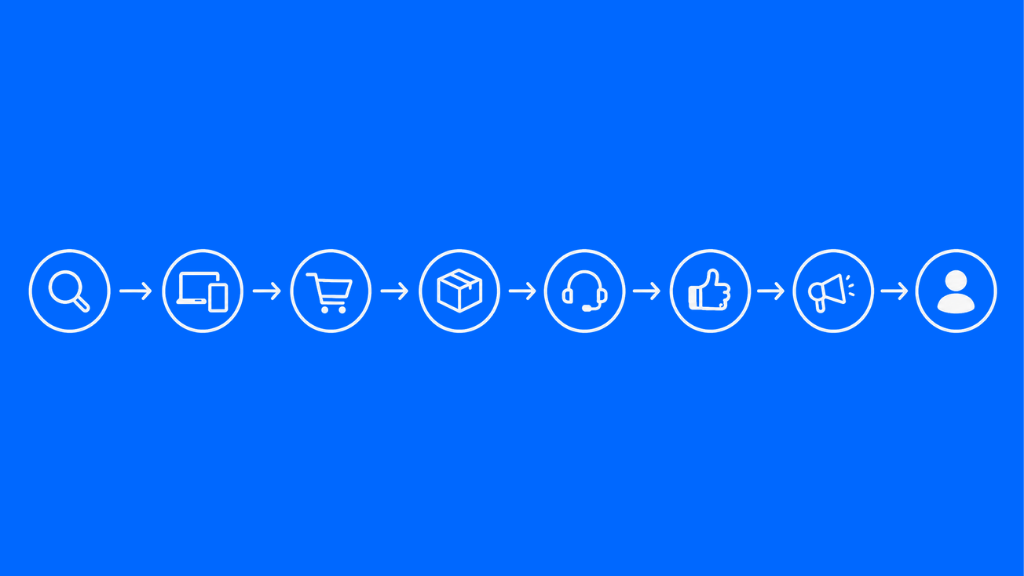
Your customers don’t think in departments.
They don’t care whether they’re talking to marketing, sales, customer support, or account management. To them, it’s all one experience with your business.
And in today’s market, they expect that experience to feel seamless.
When it doesn’t? Friction builds quickly. Customers get frustrated repeating themselves, receiving irrelevant messages, or feeling like every interaction starts from scratch. That disconnect chips away at trust and can ultimately push customers toward competitors who make the experience feel easier.
This is exactly why CRM systems have become such a critical part of modern business operations. A strong CRM doesn’t just store customer data—it connects the entire customer journey.
Customers Expect Businesses to Remember Them
Think about the last time you contacted a company for support after speaking with their sales team a few days earlier.
You probably expected the support rep to already know:
- Who you are
- What product(s) you purchased
- Your previous conversations
- Any issues or concerns you already raised
If instead you had to explain everything again from the beginning, the experience likely felt disjointed and frustrating.
That’s because disconnected systems create disconnected experiences.
A CRM Lesson I Learned the Hard Way
I remember early in my career (we’ll leave out exactly how long ago that was), segmentation wasn’t always top of mind for me, or something I took into consideration.
I was thrilled to have a shiny new CRM that allowed me to build automated email sequences triggered by specific customer actions. It felt like I discovered something magical—I could set up campaigns, hit launch, and let the system do the work. I was incredibly proud of what I had built.
There was just one problem: those emails were going to everyone who ever subscribed to our email list.
This worked well when we launched a new program. But when it came time to promote the next enrollment period, I didn’t think about excluding customers who had already purchased. As a result, the same promotional sequence was sent to past customers, current prospects, and any new leads who entered the funnel.
Most past customers ignored the emails, but some replied to let us know they had already purchased and wanted to be removed from the list. Others asked how this version differed from the one they had already bought.
I created chaos by creating a system that was supposed to save our team time and energy.
Fortunately I was able to quickly update the automation to exclude past purchasers and added safeguards to automatically remove people from the sequence once they converted to a customer.
This experience reinforced just how powerful email automation can be—but it also showed me that automation is only as effective as the strategy behind it. Without thoughtful segmentation and a deep understanding of the customer journey, even well-designed automated campaigns can become a liability, delivering irrelevant messages that create confusion, erode trust, and generate unnecessary support requests that place additional strain on the customer experience team.
I say all of this to emphasize how important using the information you have to create personalized, curated experiences is to your customers. They notice when teams operate in silos. They notice when marketing sends promotions for products they already bought. They notice when sales reps don’t know their support history. They notice when support teams lack context around past conversations.
A CRM Creates a Single Source of Truth
A well-implemented CRM acts as a centralized hub for customer information across the entire organization. Instead of every department operating independently, teams can work from the same data and customer timeline.
This unified approach allows businesses to create experiences that feel cohesive, personalized, and intentional.
A strong CRM helps unify marketing efforts, sales teams, and customer support. Let’s take a look at how each team can leverage the CRM for their touchpoints in the customer experience and how they work together.
Marketing Engagement
Your marketing team can track:
- Email engagement
- Website activity
- Content downloads
- Form submissions
- Campaign attribution
- Ad interactions
This helps create smarter segmentation and more relevant messaging.
Instead of blasting the same generic emails to everyone, marketing can tailor communication based on where customers actually are in their journey.
For example:
- New leads receive educational content and promotional messages
- Warm prospects receive product comparisons and special offers
- Existing customers receive onboarding resources or upsell opportunities
When marketing understands customer behavior, they’re able to tailor their messaging so it’s more timely, relevant, and ultimately more effective.
Sales Conversations Become More Contextual
Sales teams perform better when they enter conversations informed about where the lead came from and what their customer journey has been so far.
A connected CRM allows sales reps to instantly see:
- Which emails a lead opened
- What pages they visited
- Which resources they downloaded
- Previous conversations or touchpoints
- Where they are in the funnel
This context transforms sales conversations from cold outreach into personable conversations.
Instead of asking broad qualifying questions, reps can focus on solving real problems and addressing specific customer needs.
Customers feel understood rather than “sold to.”
Customer Support Gains Full Visibility
CX teams can make or break customer retention.
When support teams lack visibility into customer history, frustration grows quickly on both sides.
A CRM helps support CX teams by giving them insight into:
- Purchase history
- Previous tickets
- Sales notes
- Product usage information
- Communication preferences
- Lifecycle stage
This allows support reps to resolve issues faster while delivering more personalized service.
Customers don’t want to repeat themselves every time they reach out. A connected CRM helps eliminate that friction.
Lifecycle Communication Feels Intentional
The customer journey doesn’t stop after the sale.
Retention, onboarding, renewals, upsells, and advocacy all depend on ongoing communication. A well connected CRM helps businesses automate and personalize these touchpoints across the full lifecycle.
That could include:
- Welcome sequences
- Onboarding reminders
- Renewal notifications
- Customer health check-ins
- Re-engagement campaigns
- Product education workflows
- Review or referral requests
When lifecycle communication is coordinated across teams, customers feel guided instead of forgotten.
Disconnected Systems Lead to Customer Friction
Without a centralized CRM, businesses often rely on scattered tools and spreadsheets that don’t communicate with each other.
The result?
- Duplicate customer records
- Inconsistent messaging
- Poor handoffs between teams
- Lost context
- Delayed responses
- Reporting gaps
- Frustrating customer experiences
Internally, this creates inefficiency.
Externally, customers simply perceive it as poor service.
Even the best marketing campaigns or sales strategies can fall apart if the customer experience feels disconnected after the initial interaction.
Technology Doesn’t Replace Human Connection—It Enhances It
Ironically, better technology often creates more human experiences.
When teams have the right customer context at the right time, interactions become:
- More personalized
- More relevant
- Faster
- More empathetic
- More proactive
Customers feel recognized instead of treated like ticket numbers or transactions.
That’s what modern consumers expect.
Choosing the Right CRM Matters
Not all CRM platforms are built the same. Some excel in marketing automation, while others prioritize sales pipelines, customer support, integrations, or customization.
The best CRM for your business depends on:
- Your team structure
- Customer journey complexity
- Automation needs
- Existing tech stack
- Reporting requirements
- Growth goals
The key is finding a CRM that helps your teams work together instead of separately.
Because at the end of the day, your customers don’t see departments.
They see one brand, one experience, and one relationship.
And that journey should feel connected from start to finish.
Looking for the right CRM to unify your customer experience? Explore personalized CRM recommendations and side-by-side comparisons using our free CRM Search tool.